
Brainerd is not just a city on a map; it is a place where a lot of daily life depends on knowing the next connection. The numbers are modest — Brainerd’s population estimate was 14,400 in 2024, with Baxter just down the road at 9,217 in 2025 — but the systems around them are anything but small. The city, the adjacent city, the county, and a handful of shared services all overlap in ways that make the area function like one practical region.
That regional feel shows up first in transportation. Brainerd & Crow Wing Public Transit runs Monday through Friday from 6:00 a.m. to 6:00 p.m., with dispatch hours and an AI dispatcher supporting booking and trip management outside regular hours. The service is not limited to one neighborhood or one purpose; the state directory describes coverage that includes the Brainerd, Baxter, Crosby, and Pequot Lakes areas of Crow Wing County, plus the Pine River area of Cass County. Even the fare structure rewards planning ahead: advance booking costs less than same-day rides. For a small-city region, that matters. It means timing and preparation can save money, not just time.
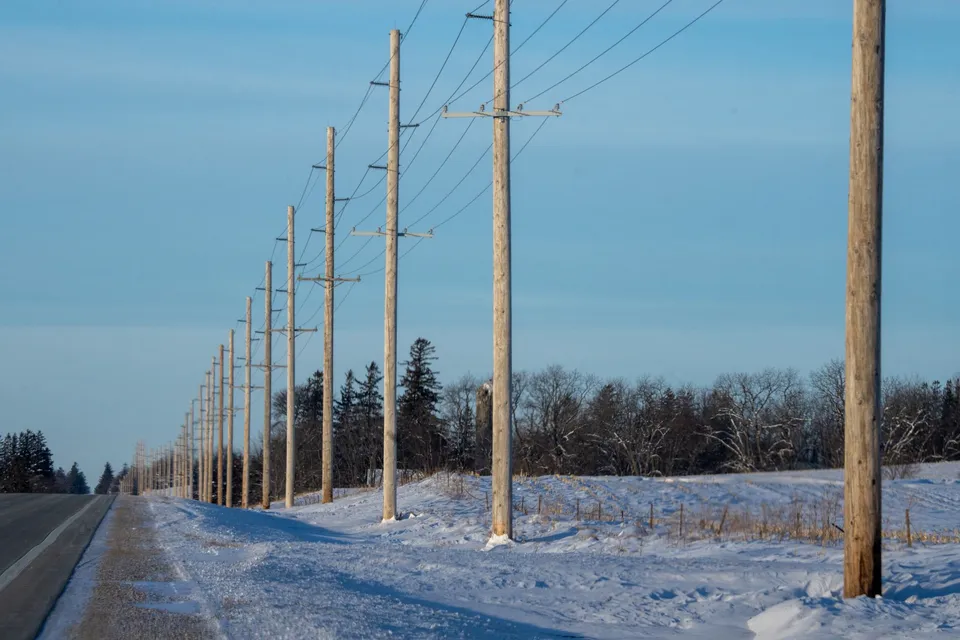
The same pattern appears in public utilities and emergency services. Brainerd Public Utilities says it has served the area since 1892, providing electric, water, and sewer service in Brainerd, parts of Baxter, and surrounding townships. Its audited statements go even further, noting that it provides electric distribution to portions of Baxter and treats 100% of Baxter’s wastewater. Brainerd Fire Department also stretches beyond the city line, serving Baxter and six townships. In other words, some of the most important services in daily life are designed from the start to cross municipal boundaries.
That cross-border setup helps explain why Brainerd often feels bigger than its population. It is a regional service center, not just a residential one. Census QuickFacts shows substantial local activity in health care, retail, and transportation: Brainerd recorded about $427 million in health care and social assistance receipts, about $334 million in retail sales, and about $48 million in transportation and warehousing receipts. Those figures match the way people actually experience the city — as a place where they work, shop, get care, and move through the area on ordinary errands rather than only as a destination.
The same story appears in commuter patterns. A Crow Wing County inflow/outflow report for 2015 showed a substantial two-way exchange of workers: many residents worked outside the county, and many people commuted in to jobs located there. That is a useful reminder that “Brainerd” and “Crow Wing County” are often part of the same labor market conversation, especially when paired with the Brainerd Lakes Regional Airport, which MnDOT lists with Brainerd & Crow Wing Transit as a ground-transport option. The airport is not just for visitors; it is another piece of the region’s working infrastructure.
For residents, students, and new arrivals, this matters in very practical ways. Central Lakes College, another key local institution, publishes an alphabetical program list and a tuition guide showing estimated 2025–2026 tuition and fees of $220 per credit. That makes it easier to see how training, work, and mobility fit together in the Brainerd area. If you can get to class, to work, or to an appointment without treating every trip as a separate ordeal, the whole region feels more manageable.
There is also a quiet sign of stability in the numbers. Brainerd’s population changed little between the 2020 Census and the 2024 estimate, while Crow Wing County shows a high share of residents living in the same house year to year. That does not mean nothing changes. It means change tends to happen through the kind of layered, steady adjustments that define a place where schools, utilities, transit, health care, and public safety all have to keep working at the same time. In Brainerd, the smartest way to read the city is not as a set of isolated stops, but as a chain of well-used hand-offs.
If you want to understand Brainerd well, start there: not with one building, one road, or one boundary, but with the connections that make ordinary days work.