
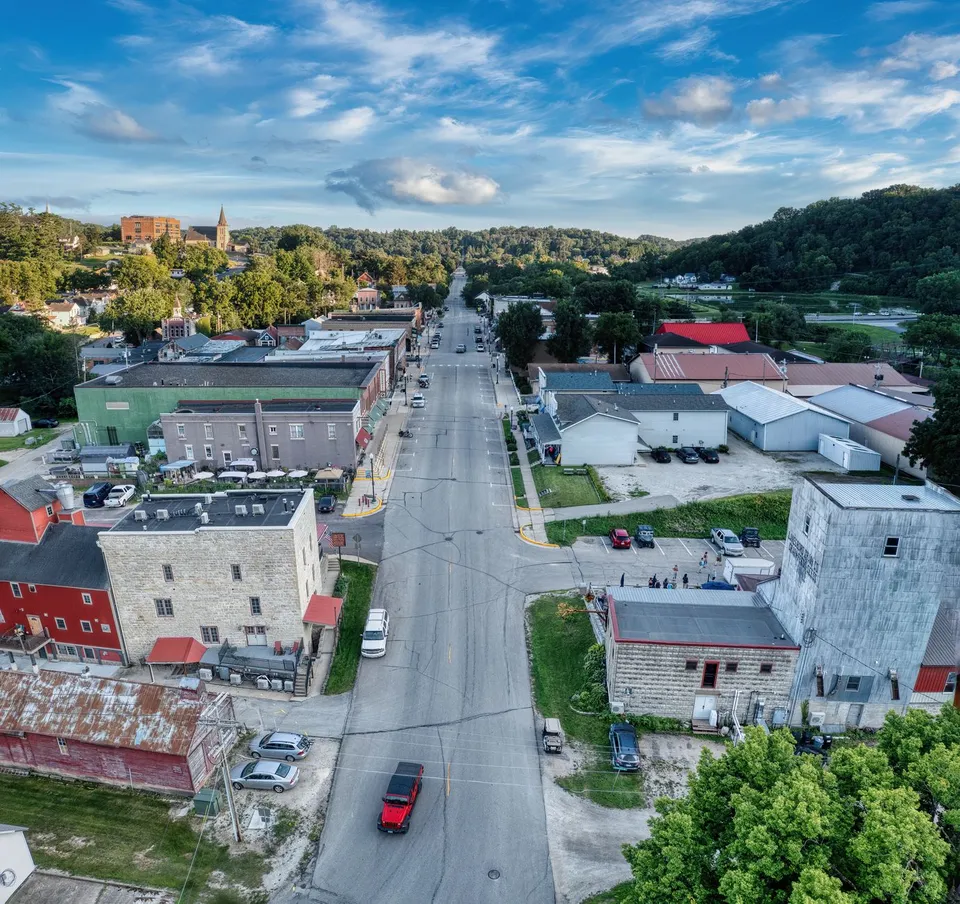
Brainerd is easy to underestimate if you only look at the city line. The city’s population is about 14,400, while Crow Wing County is 66,123, and many of the routines that shape daily life here are built to serve well beyond one neighborhood or one block. That is what makes Brainerd interesting: it is not just a place where people live. It is a place where people connect to work, water, transit, school, housing, and services through a compact regional radius.
A city that works on a practical scale
In Brainerd, the big story is often not a dramatic project or a single landmark. It is the collection of systems that keep ordinary days moving. Brainerd Public Utilities says it provides electric, water, and sewer service, serves Brainerd, parts of Baxter, and surrounding townships, and has been doing so since 1892. That kind of longevity matters because it means the city’s basic infrastructure is not an afterthought. It is part of the community’s identity.
The same is true of mobility. Brainerd & Crow Wing Public Transit operates Monday through Friday from 6:00 a.m. to 6:00 p.m., with dispatch support during the workday and an AI dispatcher available outside regular dispatch hours for booking, canceling, and monitoring trips. The service is not limited to Brainerd alone. The Minnesota Board on Aging listing describes coverage that reaches Baxter, Crosby, Pequot Lakes, and the Pine River area as well. In other words, the transit map is also a community map.
Why short trips matter here
A lot of daily life in the Brainerd area depends on whether a trip can be made without a lot of fuss. Transit fares reflect that reality. Brainerd-originating trips cost $3.00 in advance or $5.00 same day, while Baxter-originating trips cost $7.00 in advance or $11.00 same day. Those price differences are small in one sense and meaningful in another: they show that the system is designed around timing, planning, and everyday usefulness.
That same practical logic shows up in how the area connects to travel beyond the region. Brainerd Lakes Regional Airport is listed in MnDOT materials, and those materials explicitly note Brainerd & Crow Wing Transit as a ground-transport option. For a small city, that matters. It means the airport is not just a place for visitors. It is part of the local transportation chain, linked to how residents and workers move in and out of the area.
A regional economy needs regional support
Brainerd’s role as a service center also shows up in the kinds of businesses and institutions that operate here. Census QuickFacts reports about $427.246 million in health care and social assistance receipts, about $333.615 million in retail sales, and about $48.282 million in transportation and warehousing receipts for the city. That mix says a lot. Brainerd is not just a bedroom community or a lakeside stopover. It is a place where people shop, work, receive care, and move goods.
Education is part of that support system too. Central Lakes College lists a broad program inventory, and its 2025–2026 registration guide shows estimated tuition and fees of $220 per credit, with some programs carrying additional costs. For residents trying to build a new skill, change careers, or keep a job path flexible, that matters. A community college is not just a campus; it is one of the clearest ways a region grows its own workforce.
Housing tells the same story
Brainerd’s housing figures help explain the pressure and opportunity in the local market. QuickFacts shows a median gross rent of $848 in Brainerd and $1,154 in nearby Baxter, along with a median owner-occupied home value of $178,600 in Brainerd and $324,100 in Baxter. Those numbers suggest that adjacent cities can feel very different depending on housing type, location, and price point.
The housing support system is also broader than one city. Brainerd HRA says eligible families find their own rental unit in Crow Wing County and references Fair Market Rents and payment standards effective January 1, 2026. That means housing assistance is not built around a narrow city-only frame. It reflects the countywide way people actually search, move, and settle.
What makes Brainerd feel workable
The strongest feature of Brainerd may be that so many ordinary needs are close enough to fit into one mental map. Utilities have deep roots. Transit covers more than one community. The airport connects to ground transportation. The college helps people qualify for better jobs. Housing programs follow the county geography that residents actually use.
That is the Brainerd advantage in plain terms: not spectacle, but usability. Not a single giant system, but a set of practical ones that overlap just enough to make daily life feel less fragmented. In a region shaped by distance, weather, work schedules, and mixed-use errands, that kind of reliability is more valuable than it first appears.